Dr. Sam Messam on the Aspire programme and what it's building in London
Basketball England's Talent Pathway and Programme Manager on how Aspire is reshaping opportunities for young players across the country — and what London's Got Talent on 13 June means for the wider mission.
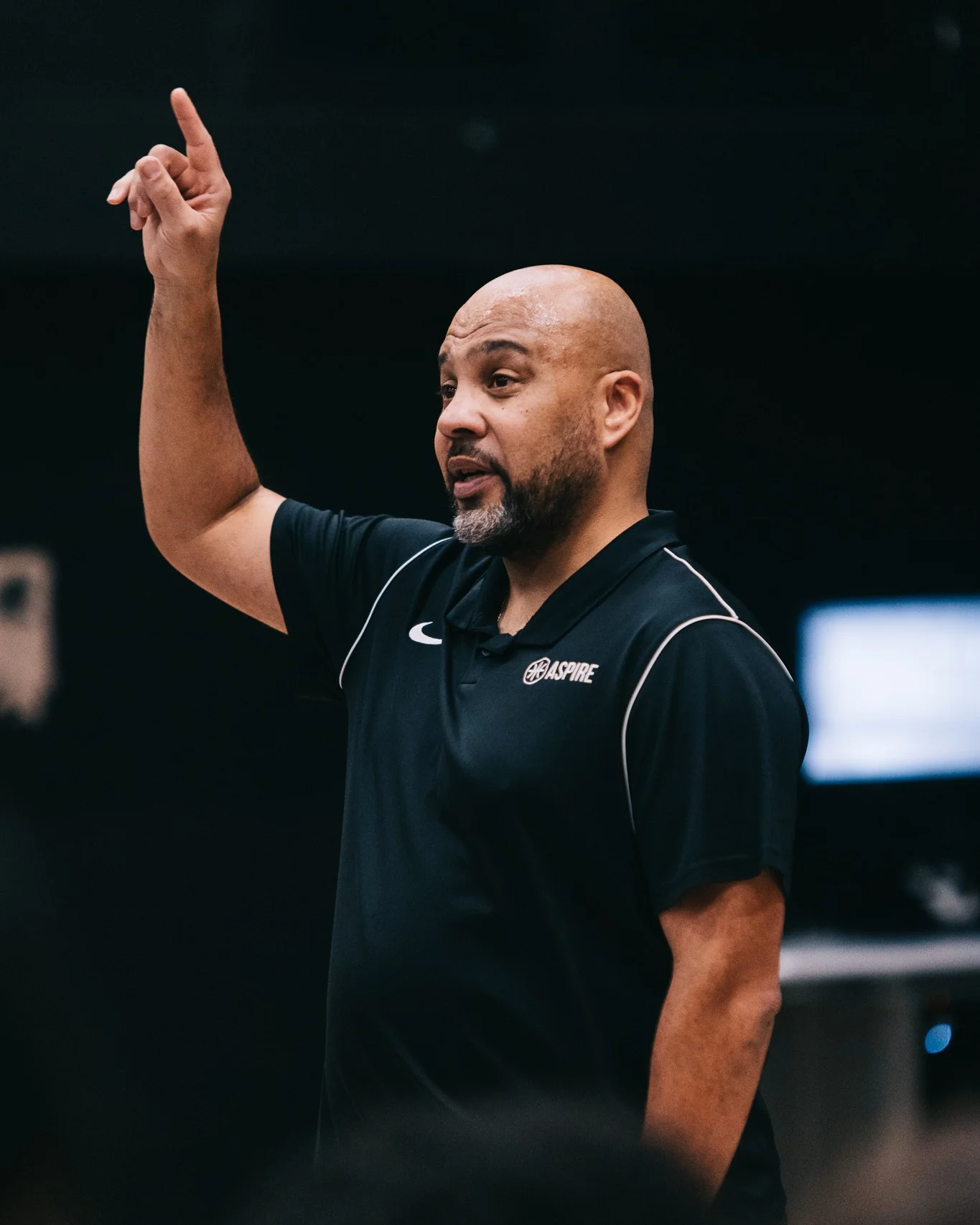
Dr. Sam Messam has spent his entire career supporting young people. Five years ago, he joined Basketball England as Talent Pathway and Programme Manager — the role he now uses to steward the Aspire programme, the national pipeline that takes around 2,500 promising 11- to 15-year-olds each year and tries to turn them into the future of British basketball.
It is a job he describes, quite literally, as paying it forward. "I am where I am because people have supported me, helped me, lifted me up," he says. "So it's most definitely a pay-forward mentality that I bring to anything and everything that I do."
Modelled on lived experience
The Aspire programme is built around the playing journey of Steve Bucknall, Basketball England's Head of Performance and a young Londoner who reached the NBA before spending 17 years as a professional. "He both understands and appreciates the hard work it takes to get there," Dr. Messam explains, "but also the challenges that are faced by many young people."
Those challenges, in the British game, are different from those in many other sports. The majority of Aspire participants come from what Dr. Messam describes as "disadvantaged, disaffected, deprived backgrounds" — young people whose financial situation, social context or family circumstances would otherwise lock them out of organised competitive basketball altogether. "Their challenges are even greater in terms of accessibility," he says.
How the pathway works
Each year, around 2,500 young people aged 11–15 are nominated into Aspire by their clubs and schools across ten English regions. Eleven days of dedicated training and education follow, organised around what Basketball England calls its five pillars:
- Game IQ — tactical understanding
- Skill technician — the technical fundamentals
- Physically robust — the body that holds up under pressure
- Persistent performer — mental strength and resilience
- Basketball committed — the whole person, on and off the court
The fifth pillar is the one Dr. Messam returns to most often. "It's about recognising the young person as an individual," he says. "It's about understanding their priorities at each stage of their maturation. They are important as a human being, as a young student, as a young person, and as a basketball player. How do we take all of that and ensure we provide a positive experience?"
Aspire coaches are trained in trauma-informed practice so they can work with the individual in front of them rather than coach to a generic group. Eleven days lead to a two-day interregional tournament, then a Super Region phase, and finally the All-Star tournament. From the 2,500 who enter at the top of the funnel, around 90 athletes ultimately move into the England U14, U15 and U17 squads — the platform for selection into GB youth international basketball, the European Championships, and on into the network of category-one academies (Barking Abbey, City of London Academy Southwark and others) where daily training environments sit alongside A-level study. Recent graduates of that pathway have gone on to Gonzaga, Columbia and other top US college basketball programmes.
"It's almost crass that the only thing we're talking about is a financial barrier — as opposed to effort, integrity, hard work, commitment and talent." Dr. Sam Messam, Basketball England
The cost of opportunity
The hardest part of the journey is the bit no-one sees from the outside. Aspire is entirely participant-funded — Basketball England receives no central grant or ring-fenced funding to run the programme, so the budget is built almost exclusively from player contributions.
For a talented U15 player who represents both their region and England, the contribution can reach £1,500–£1,600 a year. If they progress to a GB squad, that's another £500 on top. Add the sessions across the full Aspire cycle and the all-in cost of going through the programme can reach around £3,000 per year for a player going all the way. For a household stretching to support a child's sport, that's a serious financial reach — and for families on lower incomes, an impossible one.
Basketball England runs a small bursary pot, funded from a slice of the contributions themselves, that can offer 50% reductions to those who need them. It is heavily oversubscribed. Regional managers often pick up the slack — Patricia, who runs the London region, has been known to pay for children's places quietly out of her own pocket so they don't have to drop out. "When I see that child get selected to represent not just London but to represent England," she says, "that's my blessing."
Why London's Got Talent matters
London's Got Talent on Saturday 13 June 2026 is built to push back against that financial barrier. 100% of ticket sales from the day are donated directly to the Aspire programme. The prices — Family £10, Adult £5, Youth £3, Child £2 — were set so any London household can come through the door at CitySport and contribute to a child's pathway.
Money is only half of it. The other half is visibility. "There's a lot of interest in London at the minute," Dr. Messam notes — and yet, despite basketball being the second most participated sport among young people in England (behind only football), formal membership numbers sit at just 40,000–45,000. Cycling, gymnastics, swimming all count their members in the high hundreds of thousands. The young people are there. The structures, the storytelling and the funding to turn participation into pathway are still catching up.
A day like London's Got Talent — basketball, talent, music, community, all on one floor — is one way of accelerating that. Aspire's players, coaches and mentors get to be visible in front of a London audience that hasn't always seen the depth of the British game. New families discover the pathway exists. And every ticket bought at the door funds it.
"Everyone has the opportunity," Dr. Messam says. "Everyone can access and attempt to be the very best that they can be, regardless of the level they achieve."